
Home Remodeling & Construction in Glendale, AZ
Local Custom Home Builder Expertise
From Arrowhead Lakes to Palomino in Glendale, Arizona, custom home builders serve families building their next chapter. A custom home builder | Glendale, AZ brings site expertise, local code knowledge, and design precision. Glendale's blend of established neighborhoods and newer subdivisions means builders must navigate HOA rules, expansive soil conditions, and diverse lot shapes. This page covers what to expect, how custom home construction works here, and why local credentials matter.
How We Work
A clear process from site assessment through final walkthrough.
The Build Journey
Custom home construction starts with understanding your site's challenges. Glendale lots often require soil engineering due to expansive clay. Builders order geotechnical reports, verify setbacks with city planning, and confirm HOA design standards if applicable. Site prep and foundation work follow, then framing, MEP (mechanical, electrical, plumbing), and finish-out phases. Regular city inspections and homeowner check-ins keep projects aligned.
Planning & Permits
Site analysis, zoning clearance, and permit applications. In Glendale, ADUs and custom homes require early planning review for compliance with neighborhood overlays and city codes.
Foundation & Framing
Grading, foundation pouring, and frame assembly. Glendale's soil conditions demand precise engineering and inspector coordination before framing begins.
MEP Installation
Mechanical, electrical, and plumbing rough-in with code inspections. Each trade must pass city review before insulation and drywall move forward.
Finish & Inspection
Drywall, flooring, trim, and final finishes. City final inspection and certificate of occupancy confirm all work meets Glendale standards.
You'll always know what's happening next—and when.
Our Services
Specialized construction for Glendale's growing communities.
Custom Home Construction
Building from the ground up in neighborhoods like Arrowhead Ranch and Hillcrest Ranch requires attention to design authenticity. Glendale neighborhoods have distinct character standards—contemporary lines near Westgate, traditional elements in older subdivisions, and modern farmhouse in growing pockets like Palomino.
Custom home builders source materials, coordinate trades, and manage site schedules across foundation, framing, MEP, and finishes. Building officials conduct inspections at each phase to verify code compliance.
- Site-specific design tailored to lot shape, views, and orientation
- Full permit and inspection coordination with City of Glendale
- Trade management and quality oversight from start to finish
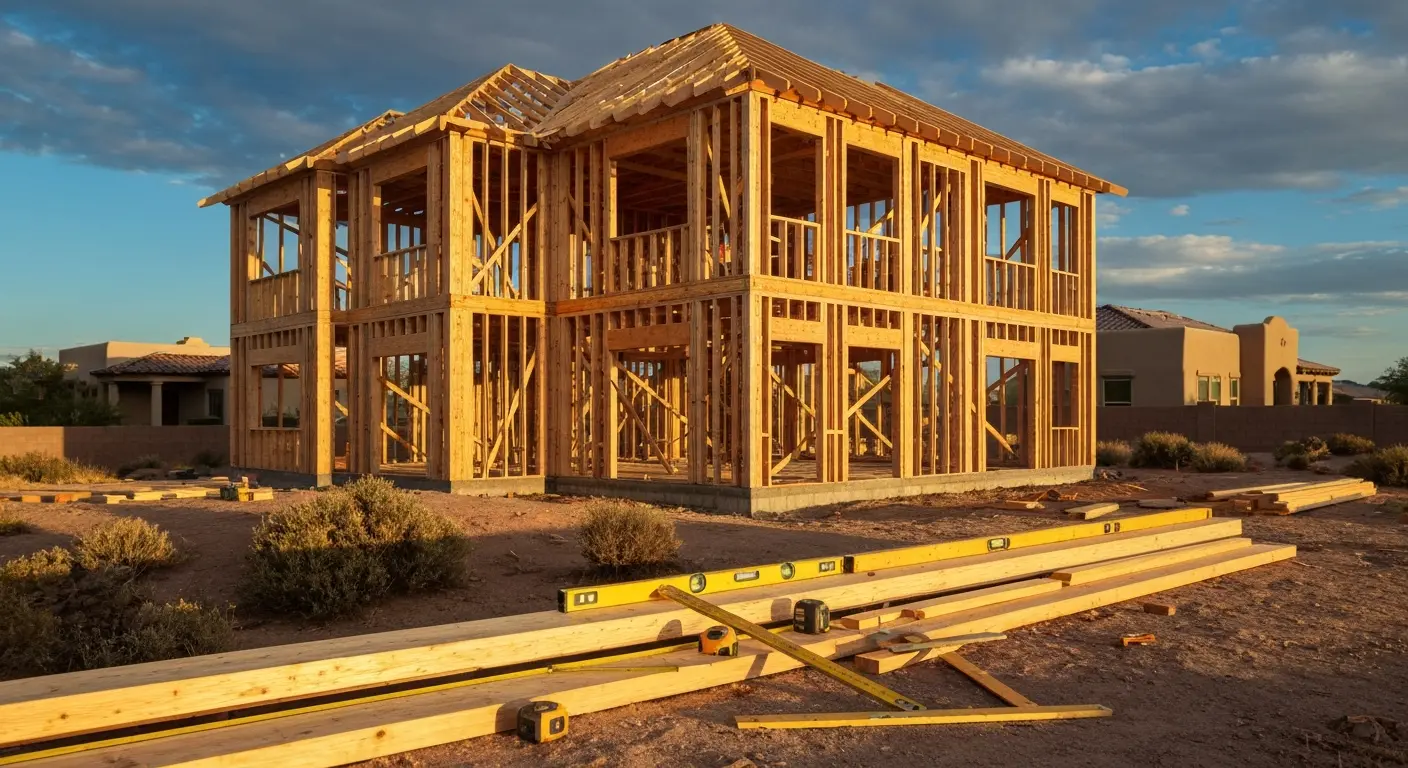
Custom home framing in Arrowhead Ranch showcasing multi-story construction typical of Glendale neighborhoods.
ADU Construction
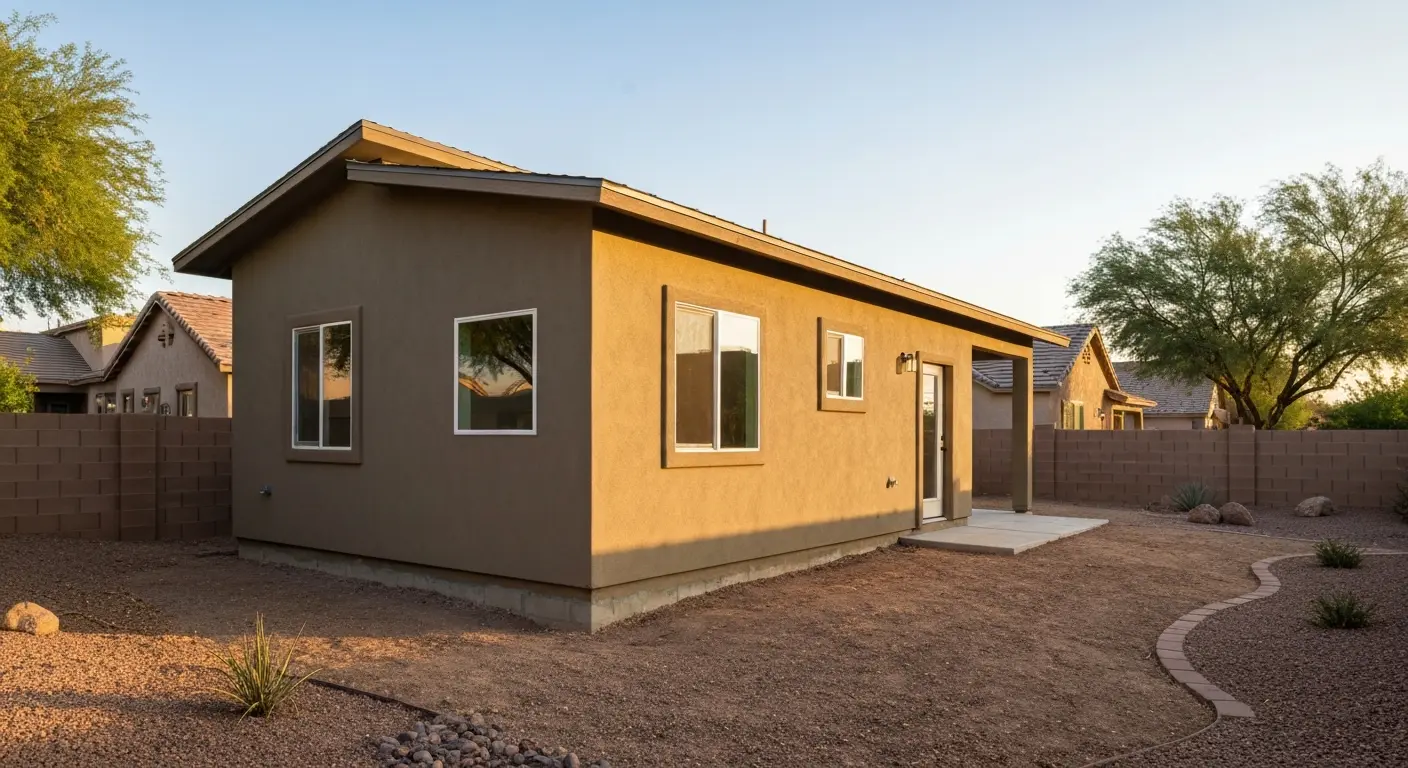
Detached ADU built in Litchfield Park, meeting Glendale setback and size requirements while maintaining neighborhood aesthetic.
Accessory dwelling units (ADUs) expand property potential for rental income, multigenerational living, or home office space. Glendale allows detached ADUs up to 1,200 square feet and attached units at 50% of primary home size (or up to 800 square feet). Zoning clearance must be secured before permitting, and separate water meters are required.
Builders handle site layout, utility coordination, fire code setbacks, and compliance with city standards. ADU design must harmonize with your primary home and respect HOA guidelines where applicable.
- Detached casitas, garage conversions, and attached additions
- Utility meter installation and fire-rated construction where required
- Zoning clearance and permit navigation from design through final inspection
New Home Framing
Precision framing sets the stage for every subsequent trade. Glendale builders frame for structural integrity, proper drainage, and alignment with site challenges like expansive soils. Lumber quality, wall sheathing, roof framing, and bracing are inspected by the city before MEP installation proceeds. Proper framing reduces callbacks and ensures long-term durability in the Arizona climate.
- Structural framing with engineered connections and proper bracing
- Lumber selection and moisture management for Glendale's dry climate
- City framing inspection coordination and defect prevention
Why Local Expertise Matters
Glendale-specific knowledge reduces delays and builds right the first time.
Site & Soil Challenges
Glendale sits on expansive clay soils, which swell when wet and shrink when dry. City code now requires soils engineering reports for all new construction—a builder familiar with local geology knows how to design foundations, specify rebar, and manage drainage to prevent cracking and settling. Builders work with geotechnical engineers and city inspectors to verify that foundation systems account for soil behavior.
Expansive soils require engineered foundations, moisture barriers, and post-construction monitoring—not standard in every market.
HOA & Design Standards
Most Glendale neighborhoods—Arrowhead Lakes, Arrowhead Ranch, Hillcrest Ranch—have active HOAs with architectural guidelines. Design review committees approve colors, materials, setbacks, and roof pitches before construction begins. Builders collaborate with HOA design review boards, submit plans early, and navigate approval timelines. Skipping this step delays framing and adds cost.
Code Compliance & Permit Flow
Glendale building officials enforce the International Residential Code plus city amendments for expansive soils, wind exposure, and fire safety. Experienced builders know inspection schedules, required documentation, and where to allocate engineering. Early coordination with the Planning Division (zoning clearance) and Building Division (permits) keeps projects on track and avoids rework.
Coverage Area & Getting Here
We serve all of Glendale and surrounding West Valley neighborhoods.
Neighborhoods & Landmarks
We build custom homes and ADUs across Glendale's diverse neighborhoods: Arrowhead Lakes and Arrowhead Ranch (north, near Arrowhead Towne Center), Palomino (northeast, growing rapidly), Litchfield Park (west, family-oriented), and Hillcrest Ranch (central, at the base of Sierra Estrella Mountains). Historic Downtown Glendale and newer subdivisions near Westgate Entertainment District also fall within our service area. Each neighborhood brings unique design preferences and HOA standards.
Accessing Services
Glendale is accessible via AZ-101 Loop and Grand Avenue from central Phoenix. AZ-101 provides quick access to Arrowhead Ranch and Arrowhead Lakes. For western neighborhoods like Litchfield Park, Olive Avenue and Westgate Boulevard provide main routes. Loop 303 runs along the city's eastern edge. Most projects begin with a site consultation where we assess lot conditions, verify zoning rules, and discuss design goals. Contact us to schedule your free consultation and site assessment in your Glendale neighborhood.
Frequently Asked Questions
Do I need a zoning clearance before building a custom home or ADU in Glendale?
Yes. All single-family residential projects—including custom homes, additions, and ADUs—require zoning clearance from the Planning Division before you submit a building permit. This confirms your project complies with neighborhood overlays, setbacks, and use regulations.
What is a soils report and why does my Glendale home need one?
Glendale's expansive clay soils require a geotechnical investigation to determine safe foundation design. The city code mandates soils engineering for all new construction to prevent foundation cracks and settlement. Your builder coordinates this early in the planning phase.
Can I build an ADU on my Glendale property?
Most Glendale single-family zones allow one detached ADU up to 1,200 square feet or an attached ADU up to 50% of primary home size. You'll need zoning clearance, and the ADU must have a separate water meter. Check with your neighborhood HOA for design approval requirements.
Do HOA rules apply to custom homes and ADUs in Glendale?
If your property is in an HOA-governed neighborhood (most Glendale subdivisions are), architectural guidelines govern design, colors, materials, and setbacks. Design review is required before you can obtain a building permit. Your builder coordinates HOA approval as part of the planning phase.
What inspections are required during custom home construction?
The City of Glendale requires inspections at foundation, framing, MEP rough-in, and final stages. Each inspection verifies code compliance. Your builder schedules inspections with city officials and addresses any required corrections before proceeding to the next phase.
Why should I hire a builder familiar with Glendale?
Local builders know soils engineering, HOA processes, city permit requirements, and inspection timelines. This knowledge prevents costly delays, rework, and non-compliance. Glendale-specific expertise means your project runs smoothly from planning through final occupancy.
DISCOVER WHAT OUR CUSTOMERS HAVE TO SAY ABOUT US
REVIEWS
proudly serving these areas
Ahwatukee, AZ
Anthem, AZ
Avondale, AZ
Buckeye, AZ
Cave Creek, AZ
Chandler, AZ
Glendale, AZ
Goodyear, AZ
READY TO take the next step?
get a free quote TODAY!
QUICK LINKS
our services
service areas
operating HOURS
Mon: 7:00 am - 4:00 pm
Tue: 7:00 am - 4:00 pm
Wed: 7:00 am - 4:00 pm
Thu: 7:00 am - 4:00 pm
Fri: 7:00 am - 4:00 pm
Sat: Closed - Closed
Sun: Closed - Closed